Breakheart Hill is steep, and steeped in history.
Three stories that connect the vineyard with its past...
According to local sources, the hill was once free of trees, and overgrown with bushes, with woodland either side.
Deer used to climb through the gap in the trees. The hill was named Brake Hart; Brake being the late middle English word for a place overgrown with bushes, brambles, or cane. Hart is an archaic word for "stag".
The name morphed to Breakheart over the centuries.
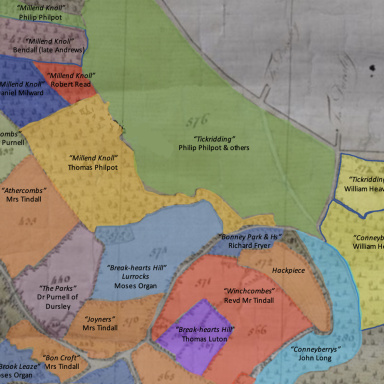
1763
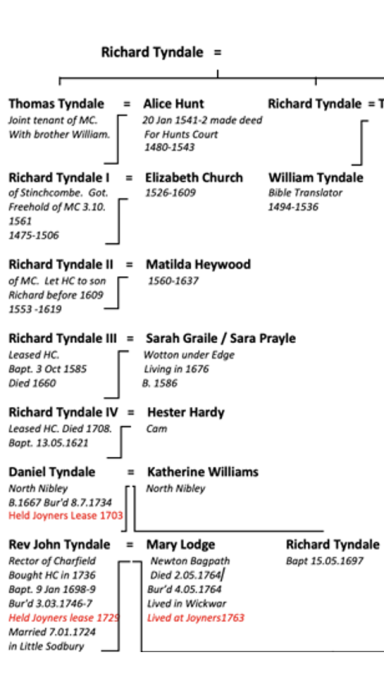
Mary Tindall is the tenant of "Joyners Ground", the orginal field name for the vineyard.
Mary Tindall (Tyndale) was the widow of Rev John Tyndale, rector of Charfield. John inherited the lease from his father Daniel Tyndale, who took up the lease in 1703.
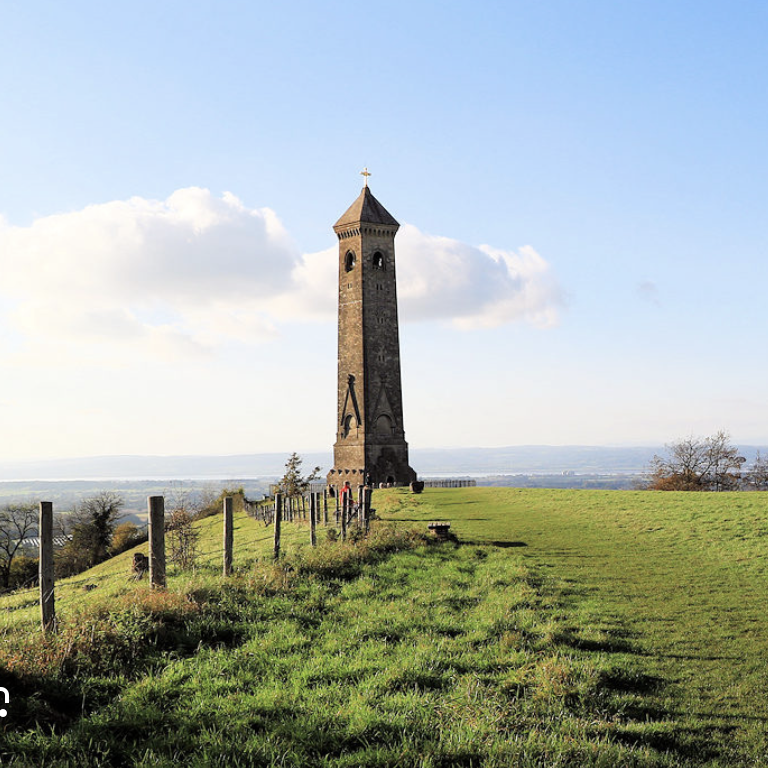
Four generations separated Daniel and his relative William Tyndale, the martyred bible translator. The Tyndale Monument, built in his memory, can be seen from the vineyard.
Rev John died in 1747 and John his son died in 1755, so the lease technically expired then – except that because the property had previously been let via the manor court, Mary retained the lease in her right as his widow – this is often known as “widow’s bench”.
During this period the land was owned by the Earl of Berkeley, and formed part of the Berkeley Castle estate.
In 2024, the vineyard field had its 1703 name reinstated.
1825
Textile strikes
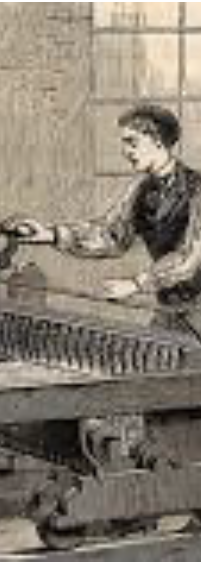
In the mid-19th century the main industry in the district was textiles. In 1825 Timothy Exell, known throughout the clothing districts as the ‘King of the Weavers’, and the other officials of the Union presented the clothiers with a list of minimum wage rates and awaited a response.
The weavers were disappointed, for their demand coincided with the deepening of the financial crisis in early 1825, when all clothiers were in difficulties and many were going out of business. The weavers then decided to try to enforce their demand by means of strike action.
Mass meetings were called and, on 29th April, three thousand gathered on Stinchcombe and Breakheart Hills between Dursley and Wotton-under-Edge; the numbers may have been exaggerated but the attendance was certainly impressive enough to alarm clothier-magistrates.
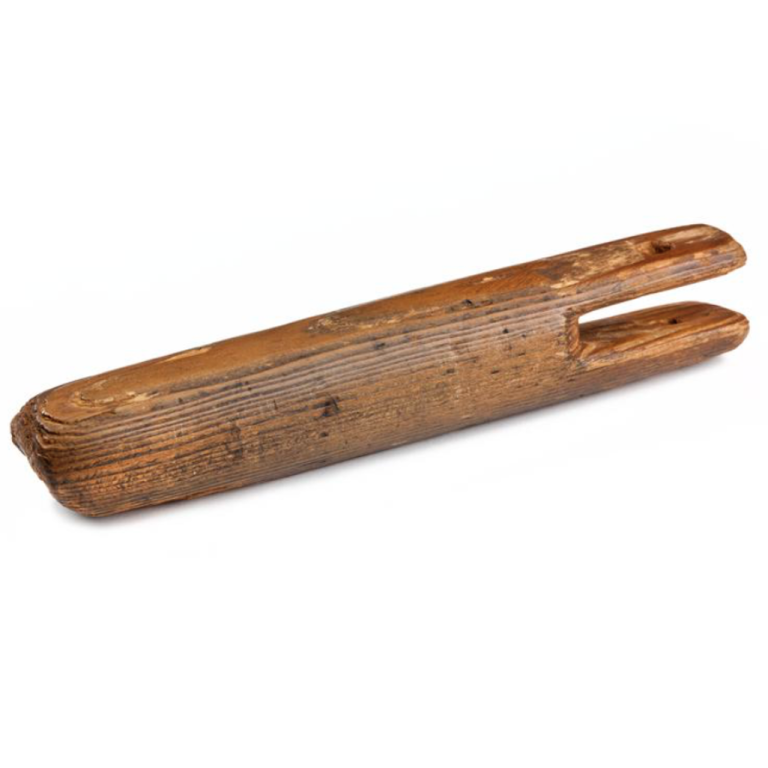
It had been arranged that weavers should bring their shuttles with them and give them to union officials who buried them in secret places. All weaving was thus prevented, bringing the whole industry to a standstill.
Large parties of weavers toured the valleys ‘persuading’ those who had not come to the meetings to surrender their shuttles; there seems to have been no actual violence.
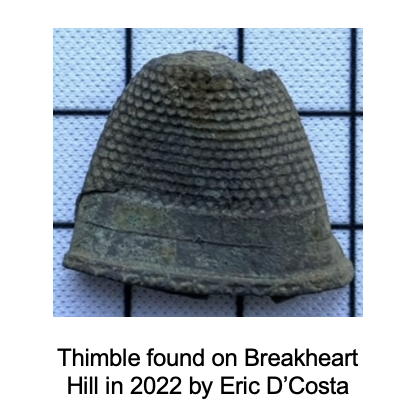
A decade later, On 2 January 1835, John May, aged 20, weaver, was convicted by three magistrates of cutting and destroying a young ash tree growing in Breakheart Hill Wood, the property of Lord Segrave (William FitzHardinge Berkeley).
The entry in the Horsley gaol register records the punishment: six weeks hard labour or pay £1-5-0 fine and 1/- damage and 4/- costs. He paid the fine and costs to the Governor and was liberated.
John lived in the house now known as Hill View, next to the vineyard.
1944
US Airforce Mosquito crashes on Breakheart Hill
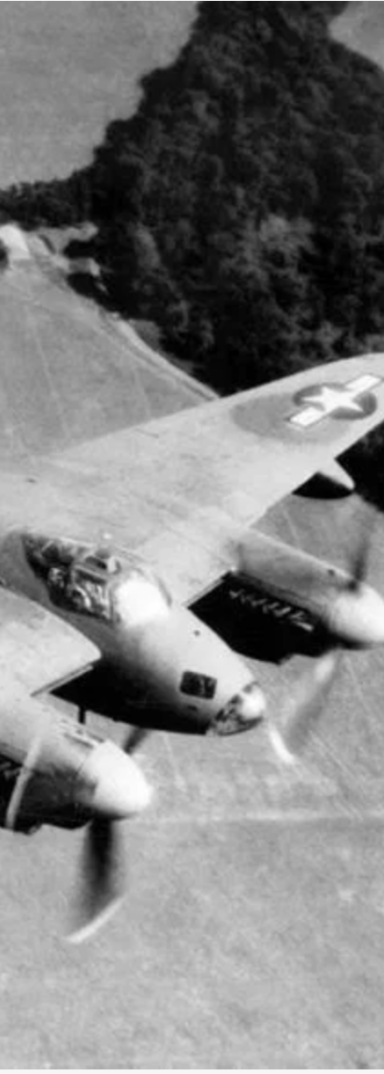
At 11.24 hours on 23rd December 1944 a de Havilland Mosquito of the 654th Bomb Squadron, Reconnaissance Support unit of the USAAF 25th Bomb Group took off from US Army Airforce Station 376 (RAF Watton in Norfolk) for a one hour local test flight.
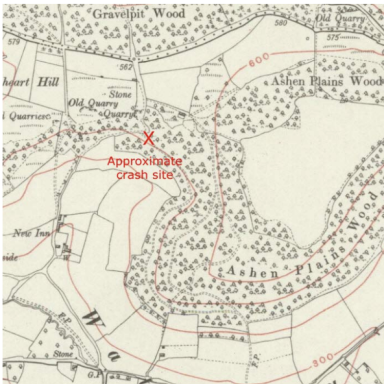
Nothing was heard from it again. At 15.00 hours the normal overdue action was taken but it wasn’t until 16.05 that RAF Flying Control at Babdown Farm, just outside Dursley, reported that an aircraft had come down at approximately 12.30 hrs in the woods at Breakheart Hill.
The exact circumstances of the crash and the reason why the aircraft found itself over Dursley remain a curiosity. The official USAAF accident report gives the cause as ‘unknown’ and the responsibility as ‘undetermined’.
However, witnesses report that it was a foggy day and it seems the crew just got lost and in trying to find their bearings flew too low and were not able to make it over the hill.
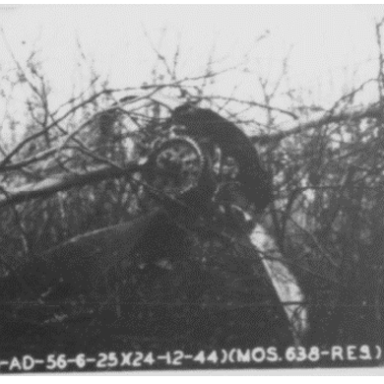
The aircraft disintegrated on impact, so much so that one of the engines tore free and rolled down the hill, ending up between the Vineyard and the New Inn at Waterley Bottom. Ivy Workman, who lived nearby, distinctly remembers the load bang of the crash and the sight of the engine blocking the lane.
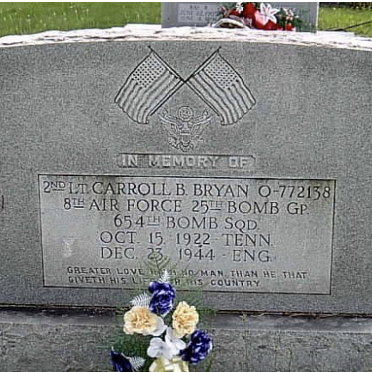
Air force personnel were soon on the scene and promptly requisitioned the pub for use as their HQ while the recovery was carried out. Unfortunately, both USAAF crew members on board the aircraft; the pilot, Flight Officer James D. Spear and navigator, 2nd Lieutenant Carroll B. Bryan, perished in the crash.
Carrol Bryan is buried at Henry’s Crossroads Cemetery, Kodak, Sevier County, Tennessee.